




1. Department Name:
Department of Pharmacy (Pharmacology Dept)
2. Department Photo:
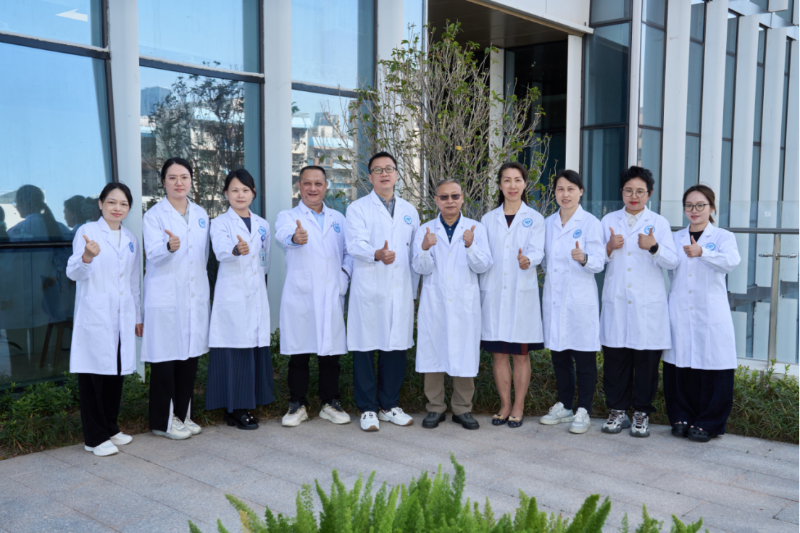
3. Department Introduction:
Established in June 2025, the Department of Pharmacy is responsible for hospital-wide pharmaceutical affairs management, drug procurement, storage and maintenance, prescription dispensing, clinical pharmacy, and medication safety and quality control. It implements drug laws and regulations, establishes management policies, and ensures drug supply. The department conducts prescription review, dispensing, and medication counseling; performs prescription analysis, adverse drug reaction monitoring, and management of antimicrobial agents and special controlled substances; and provides clinical pharmacy services to promote rational drug use and prevent medication risks. The department currently comprises five sections: Department of Pharmacy Administration, Outpatient Pharmacy, Central Pharmacy, Drug Warehouse, and Clinical Pharmacy.
4. Talent Team:
The department has 11 professional pharmacists, including 2 chief pharmacists, 1 associate chief pharmacist, and 6 supervising pharmacists. Among them, 3 hold a master’s degree, and 4 clinical pharmacists hold clinical pharmacist qualification certificates.
5. Research Achievements:
In the past five years, the department has undertaken 1 district-level research project, published 3 journal papers, and co-authored 1 monograph.
6. Development Goals:
Pharmaceutical management system improvement: Continuously optimize the full-process management of drugs, promote information and intelligent construction, achieve closed-loop management of drug procurement, storage, dispensing, use, and monitoring, and ensure medication safety.
Deepen clinical pharmacy services: Fully carry out pharmacy outpatient clinics, medication monitoring, individualized dosing regimen design, multidisciplinary consultations, and related services.
Enhance rational drug use: Regularly conduct prospective prescription/order review, strengthen special reviews of psychiatric drugs, antimicrobial agents, key monitored drugs, and special controlled substances, and achieve a prescription rationality rate of over 98%.
Strengthen talent team building: Recruit 1-2 Ph.D.s, add 2-3 senior professional titles, and build a high-quality team with “medical knowledge and pharmaceutical expertise, and physician-pharmacist-nurse collaboration.”
Promote research and teaching: Leverage the hospital’s advantageous disciplines to pursue evidence-based pharmacy, drug safety evaluation, real-world studies, and other directions. Within five years, undertake 2-3 research projects at or above the district level, publish 8-10 papers in core journals, co-author 1-2 textbooks or monographs, and strive to become a training base for pharmacy interns and visiting professionals.
Create a smart pharmacy benchmark: Build a smart pharmacy, a rational drug use prescribing review platform, and explore “Internet + pharmacy” service models to provide full-course pharmaceutical care to patients.
7. Profiles and Photos of Specialists (with titles of Associate Chief Physician or higher, or Master’s degree or higher):